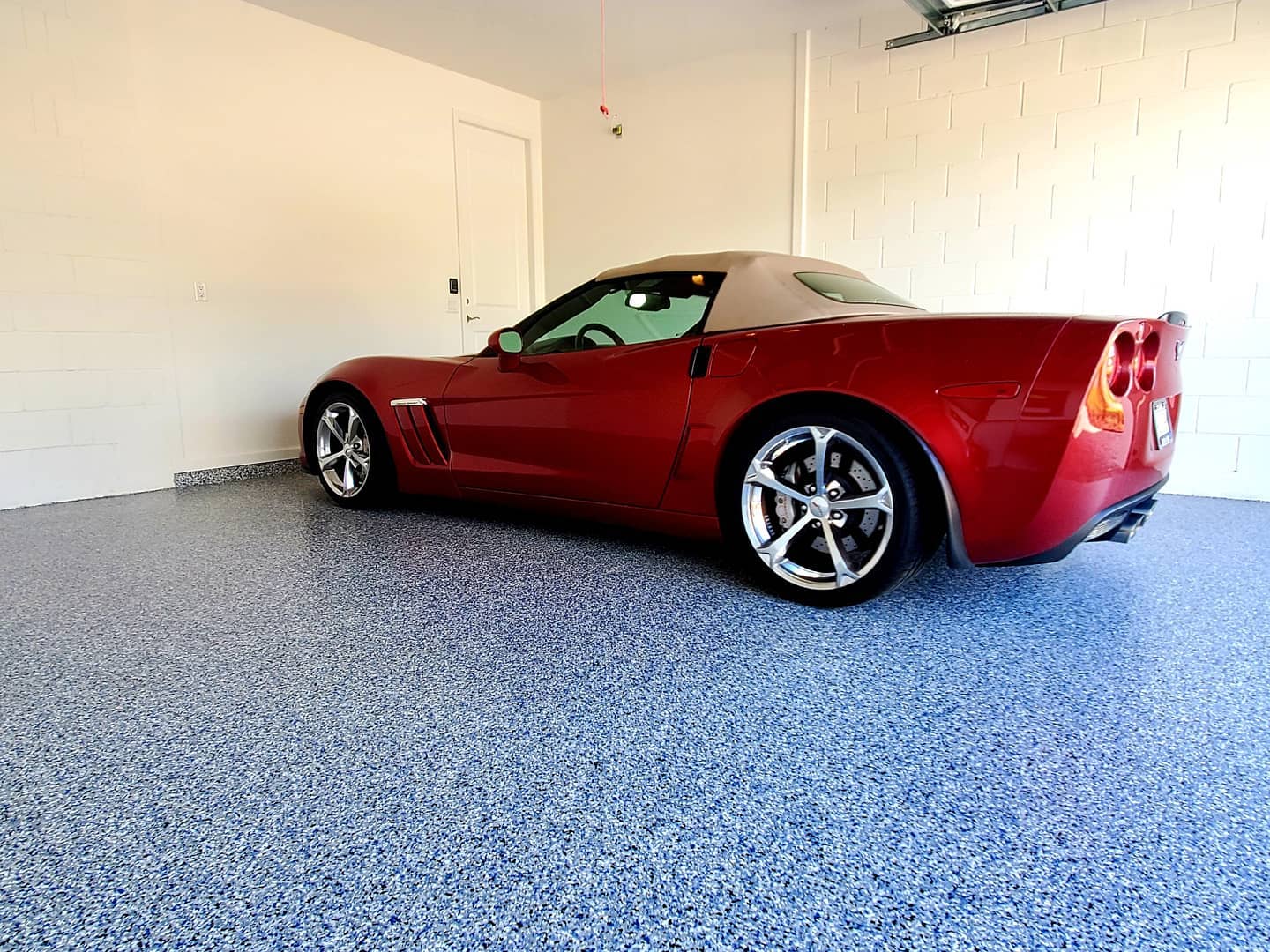
Polyaspartic vs Epoxy Garage Floors in Florida: Which One Actually Lasts?
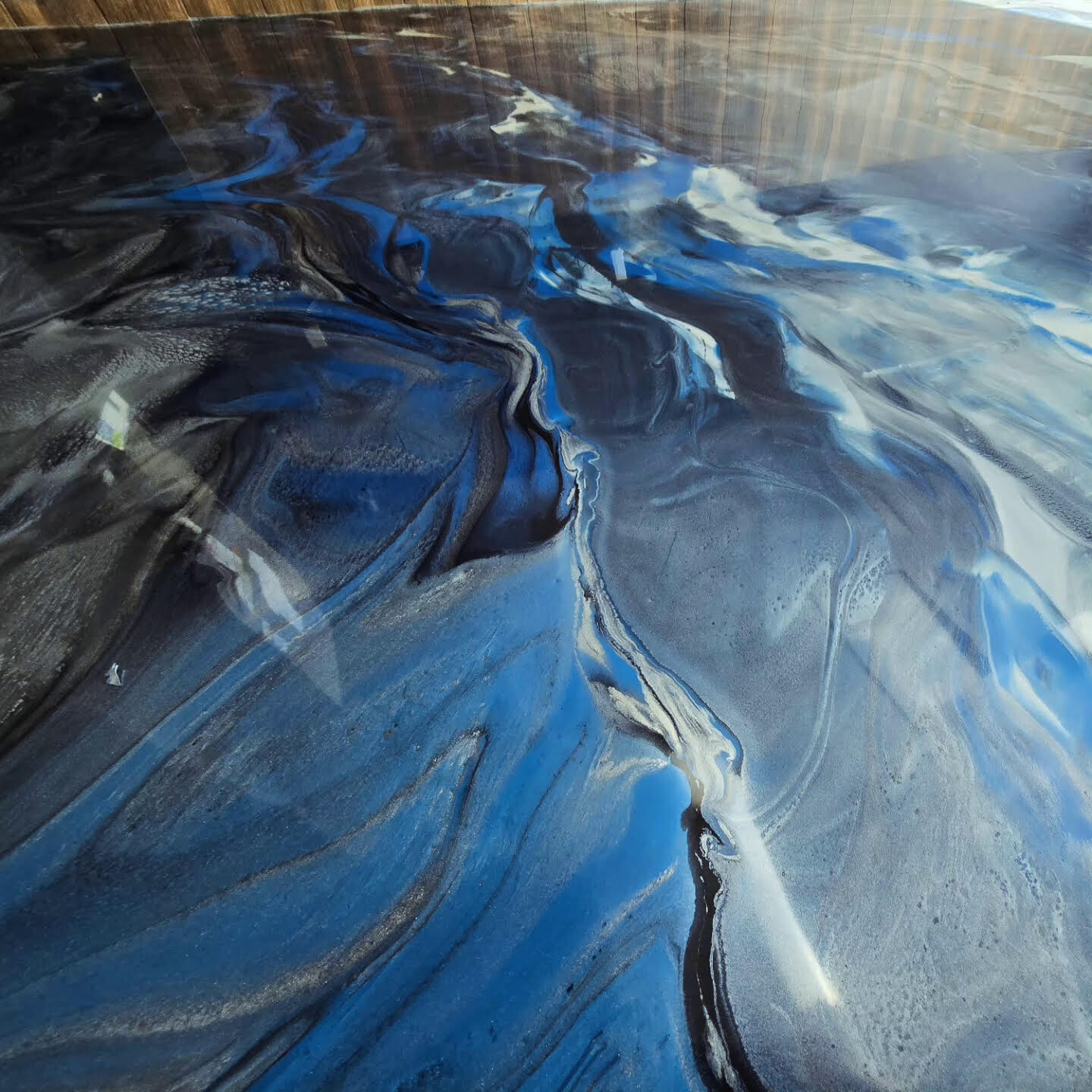
If you have gotten two quotes for a garage floor, you have probably heard two different words: epoxy and polyaspartic. They are not the same material and in Florida the difference shows up faster than it does almost anywhere else. Here is the practical comparison, without the chemistry lecture.
Quick comparison
| Epoxy | Polyaspartic | |
|---|---|---|
| Cure speed | Slow, often 24 to 72 hours between coats | Fast, multiple coats in a single day |
| UV stability | Ambers and yellows with sun exposure | UV stable, holds color |
| Hot tire pickup | More prone to it | Highly resistant |
| Flexibility | Rigid, less forgiving of slab movement | More flexible, tolerates movement better |
| Temperature range for install | Narrow | Wide |
| Typical role | Often used as a basecoat or in controlled commercial spaces | Full system, including the topcoat |
| Up-front cost | Lower | Higher |
What each one actually is
Epoxy is a two-part resin and hardener system. It has been the default garage floor product for decades, it bonds well to properly prepared concrete, and it builds thickness nicely. It is also rigid and it is not UV stable, which is the crux of the Florida problem.
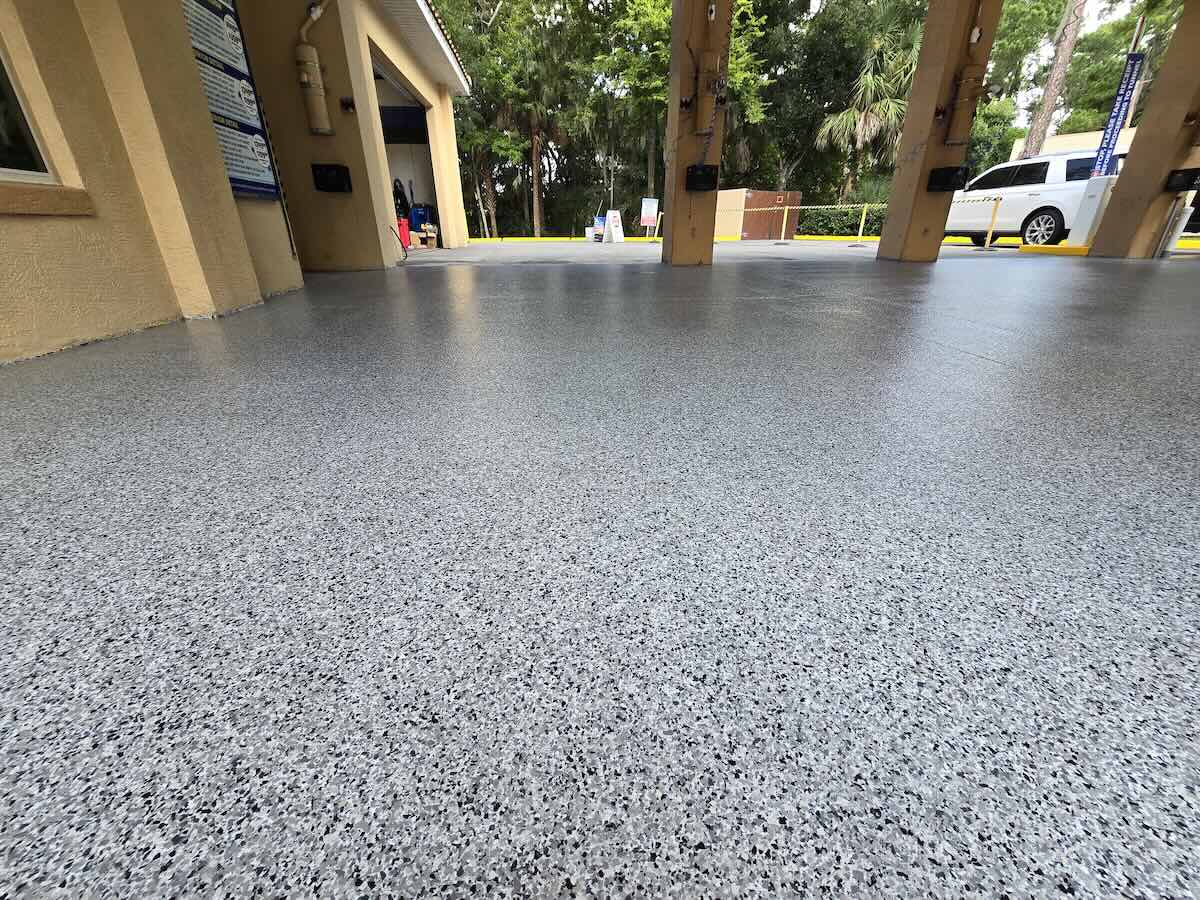
Polyaspartic is a subset of polyurea. It cures far faster, it stays flexible, and it holds its color under UV. In practice, most quality residential systems today are a hybrid: a strong basecoat, a broadcast of decorative flake, and a polyaspartic topcoat doing the actual protective work.
The four Florida-specific pressure points
1. UV and ambering
A Florida garage door opens several times a day and sun rakes directly across the slab. Straight epoxy topcoats amber under that exposure. Whites go cream, grays go tan, and the effect is uneven because the sun does not hit the whole floor equally. Polyaspartic topcoats are UV stable and hold the color you picked.
2. Hot tire pickup
This is the failure most people have actually seen: you park a hot car, the tire softens the coating under it, and when you pull out, the coating lifts off in tire-shaped patches. Heat plus a rigid coating plus a marginal bond is the recipe. Polyaspartic resists it far better, and proper mechanical prep underneath resists it better still. Neither one saves a floor that was never ground.
3. Humidity and moisture vapor
Florida slabs breathe. Moisture vapor moving up through concrete is a real cause of coating failure here, and epoxy's slower cure window gives that moisture more time to interfere while the coating is still green. Polyaspartic's fast cure narrows the window. On slabs where moisture is a known problem, the right answer is a moisture-tolerant system chosen after looking at the slab, not a product picked from a catalog.
4. Install time and your garage
Practical, not chemical, but it matters. Because polyaspartic cures fast, a flake floor is typically a two-day job. You walk on it in about 24 hours and park on it after about 48. A full epoxy or metallic build takes four to five days, which means four to five days of your garage contents in the driveway.
Where epoxy still makes sense
Epoxy is not a bad product, it is a misapplied one. It is genuinely good as a basecoat, where its build and bond do the work and it never sees sunlight. It is also reasonable in interior commercial and industrial spaces with no UV exposure and controlled traffic, where cost per square foot dominates the decision. What it should not be in Florida is the final, exposed layer of a residential garage floor.
The part nobody quotes on: preparation
Here is the uncomfortable truth. The gap between a good polyaspartic floor and a bad one is wider than the gap between polyaspartic and epoxy. The best product in the industry, rolled over an unground slab, will fail.
We profile every floor with vac-assisted diamond grinding so the coating mechanically keys into the concrete, and we repair cracks and divots before anything else goes down. When you compare quotes, compare prep first and product second.
The verdict for a Florida garage
For a residential garage in Volusia, Flagler, or Central Florida: a properly prepped polyaspartic system with a flake broadcast. It resists UV, it resists hot tire pickup, it tolerates slab movement, it goes down in two days, and it is what we back with our lifetime residential warranty for as long as you own and live in the home.
See the finishes in flake and metallic, or look at real installs in the gallery. Call (386) 679-0226 or get a free quote.
Frequently asked questions
Is polyaspartic better than epoxy for a Florida garage?
Does epoxy really turn yellow?
What is hot tire pickup?
How long before I can park on a new polyaspartic floor?
Can you put polyaspartic over my existing epoxy floor?
Does polyaspartic scratch?
Get a real number for your garage
Free, in person, and firm. We do not price a floor without seeing the slab.
Keep reading
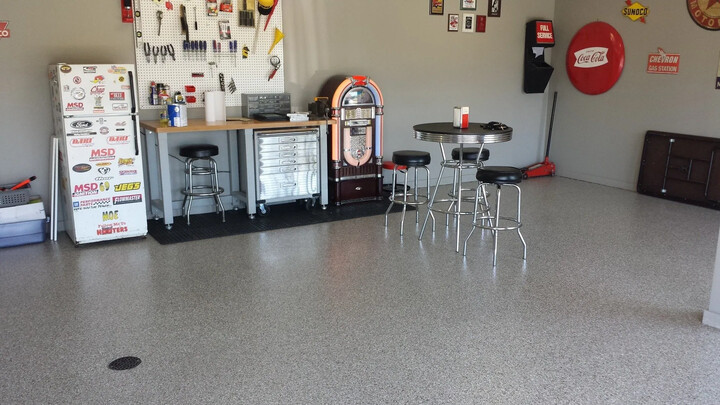 Get Your Garage Done Before the Holidays: Why Fall Is the Best Time to Coat
Lower humidity, fewer storms, and milder heat make fall the best time to coat a Florida garage floor. Here is
Get Your Garage Done Before the Holidays: Why Fall Is the Best Time to Coat
Lower humidity, fewer storms, and milder heat make fall the best time to coat a Florida garage floor. Here is
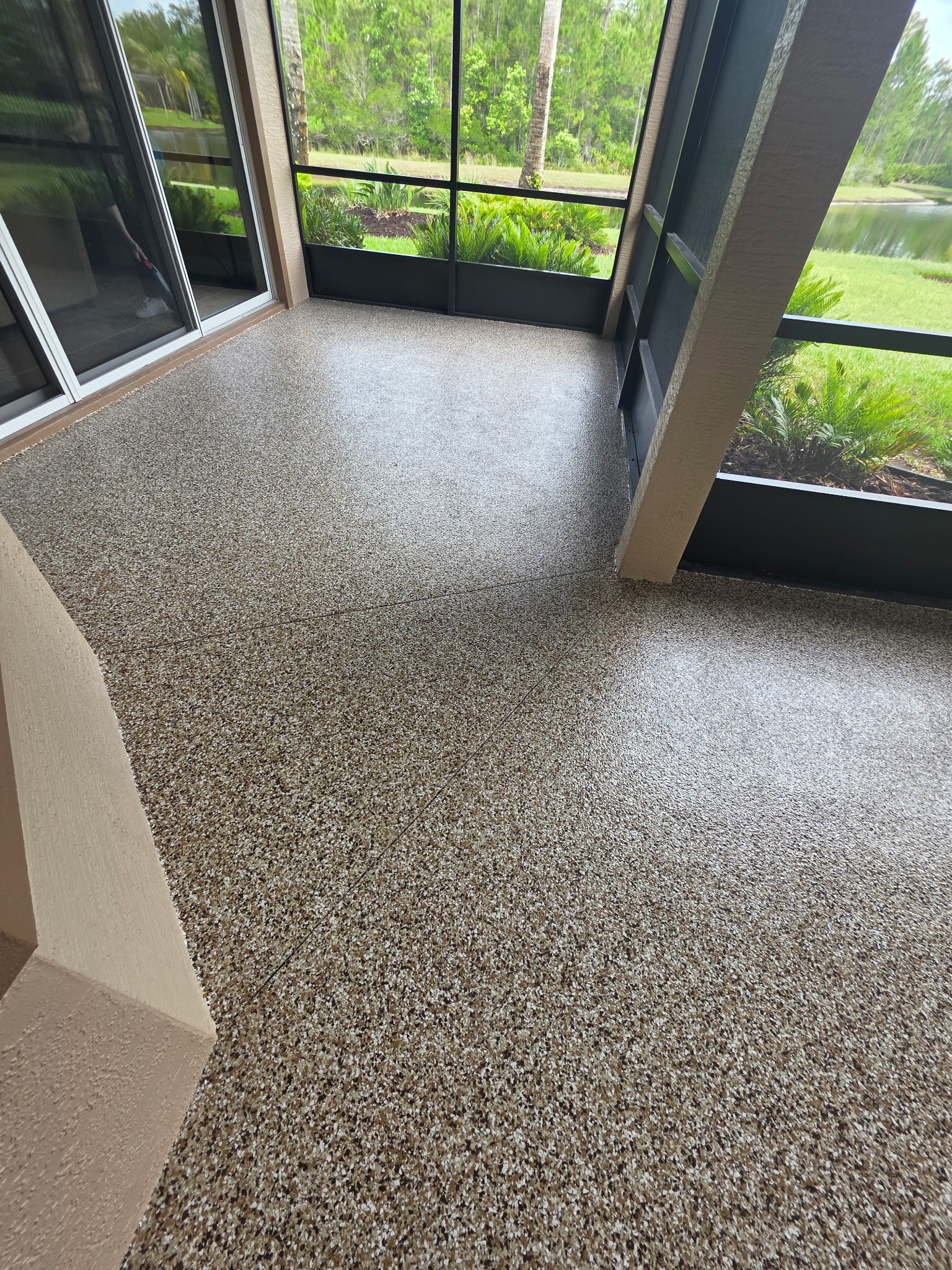 Beyond the Garage: Coating Patios, Basements, and Commercial Floors
The same polyaspartic system that fixes a garage works on patios, lanais, interior slabs, and commercial floor
Beyond the Garage: Coating Patios, Basements, and Commercial Floors
The same polyaspartic system that fixes a garage works on patios, lanais, interior slabs, and commercial floor
 Storm Ready Floors: How Concrete Coatings Handle Florida's Humidity and Flooding
Florida humidity and storm flooding are hard on a bare garage slab. Here is how a properly prepped coating han
Storm Ready Floors: How Concrete Coatings Handle Florida's Humidity and Flooding
Florida humidity and storm flooding are hard on a bare garage slab. Here is how a properly prepped coating han
Explore more
See the finishes we offer, read what your neighbors say, or find another community we serve near Polyaspartic vs Epoxy Garage Floors in Florida: Which One Actually Lasts?.
Flake & metallic styles
Browse our flake and metallic finishes.
View styles →Reviews
Real results from homeowners and businesses across Central Florida.
Read reviews →Our work
Finished garage, home, and commercial floors from recent jobs.
View gallery →