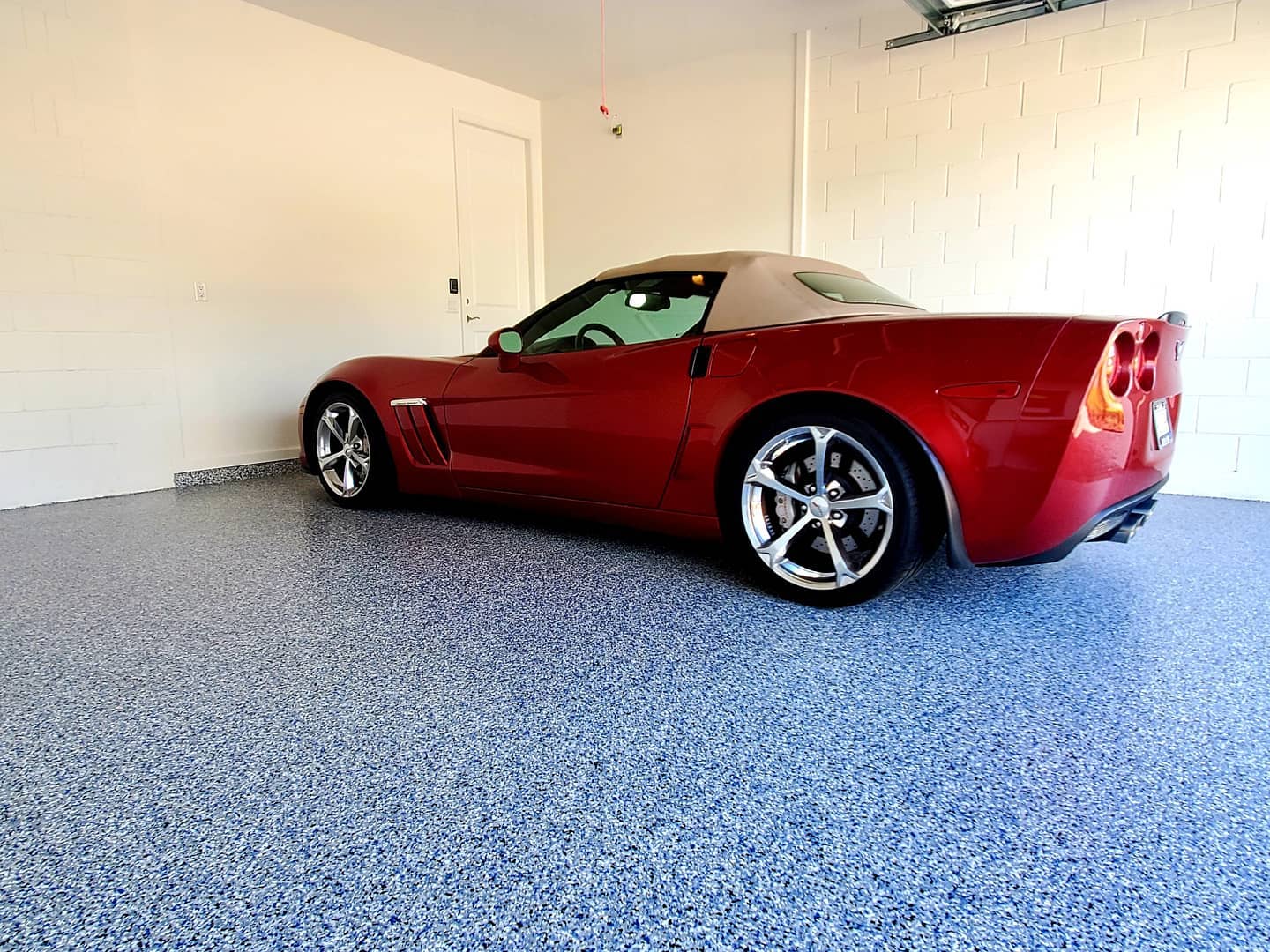
Why Garage Floor Coatings Peel in Florida (And the Prep That Prevents It)
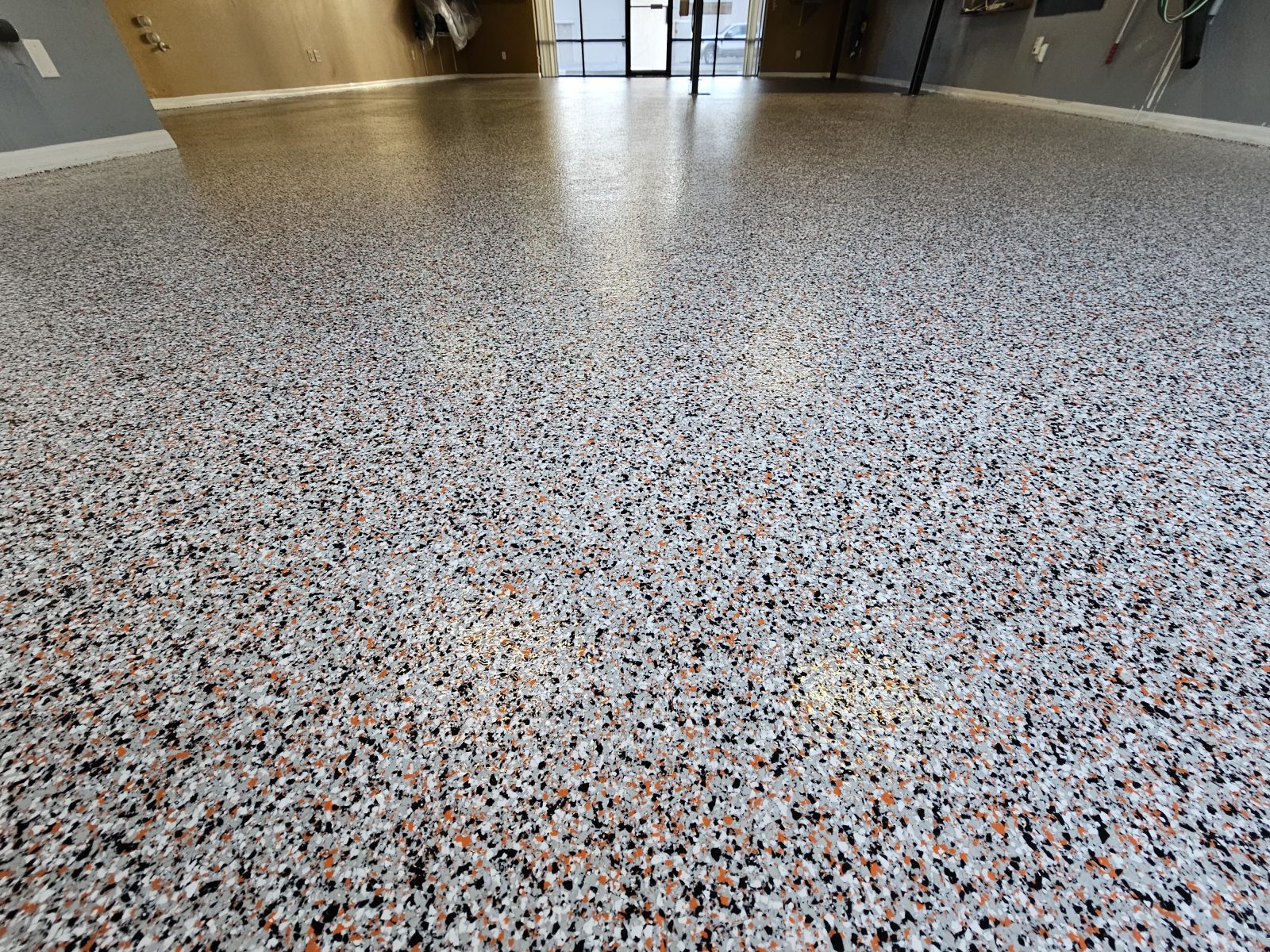
We get called out to failed garage floors constantly. Peeling at the edges, chips lifting in sheets, tire-shaped bare spots, a chalky haze that will not clean off. Homeowners almost always blame the product.
In our experience it is almost never the product. It is adhesion, and adhesion is decided in the first two hours of the job, before a drop of coating is opened. Here are the six causes we actually find.
1. The slab was never mechanically profiled
Concrete straight off a trowel is dense and closed. Coating bonds to it the way tape bonds to glass: it holds until it does not. Mechanical profiling with a diamond grinder opens the surface and gives the coating a texture to lock into. It is the single most important step in the entire process and it is the first one a low bid cuts.
Acid etching is the common shortcut. It does something, but it is inconsistent, it depends on the etchant fully neutralizing and rinsing, and it leaves residue in the pores if it does not. Pressure washing does nothing at all for adhesion.
If your old floor is coming up in sheets with clean, smooth concrete underneath, that is the fingerprint of a slab that was never ground.
We use vac-assisted diamond grinding on every floor. It is dust controlled, so your garage, your driveway, and your cars stay clean while it happens.
2. Moisture vapor moving up through the slab
Florida slabs sit on wet ground and many older ones were poured with no vapor barrier or a compromised one. Moisture moves up through the concrete continuously. When it hits the underside of a coating that cannot breathe, it pushes. The result is blistering, bubbling, and delamination that starts in the middle of the floor rather than at the edges.
This is why a slab needs to be evaluated, not just cleaned. A floor with a known moisture problem needs a system chosen for it.
3. Contamination in the concrete
Years of oil, transmission fluid, brake cleaner, and driveway runoff soak into an uncoated slab. Grinding removes the top layer, but deep contamination in a heavily stained area has to be degreased and treated before coating, or the coating will simply not stick in that spot. It is usually a patch under where the engine sat, and it shows up within the first year.
4. Coating over a sealer or an old failed coating
Many builder-grade slabs were sealed. Sealer is designed to keep liquids out of concrete, which is exactly the opposite of what you want under a coating. It has to be ground off.
The same applies to a previous coating that is already compromised: putting a new coat over a floor that is quietly delaminating just adds weight to the failure.
5. The system is too thin, or has no topcoat
Big-box kits and low bids share a problem: not enough material. A thin single-coat floor with no protective topcoat has no wear layer. It scuffs, it dulls, it picks up on hot tires, and it will not survive a Florida summer of a car parked on it every day.
Mil thickness is invisible in a photo and it is one of the biggest cost differences between quotes.
6. It was installed in the wrong conditions
Temperature, humidity, and dew point all matter during application, and they matter more here than in most of the country. Coating a slab that is below dew point traps moisture at the bond line. This is a discipline problem, not a product problem, and it is one of the reasons an experienced installer is worth the difference.
How to spot a bad prep job before you buy
- The quote does not mention grinding or shot blasting anywhere in writing.
- The whole job is promised in a few hours with no grinding stage.
- No one asked to look at your slab before quoting.
- There is no discussion of cracks, oil stains, or moisture.
- The warranty is verbal, or the company has been operating under its current name for less than a couple of years.
My floor is already peeling. What now?
The honest answer is that a delaminating coating cannot be patched into a good floor. It has to come off. We grind the existing coating off, evaluate the slab underneath, repair what needs repairing, and install a proper system over it. It costs more than a floor that was never coated, because removal is real work, and it is the only version of this that lasts.
If your existing floor is sound and just looks tired, that is a different conversation and sometimes a recoat is the right call. We will tell you which one you have. We are not going to sell you a full rebuild you do not need.
Do it once
We have been coating floors in Volusia and Flagler for over ten years, we are licensed and fully insured, and our residential floors carry a lifetime warranty for as long as you own and live in the home (certain limitations apply). You work directly with Ryan from quote to final walkthrough.
See what our services cover, browse the gallery, or read our reviews. Call (386) 679-0226 or request a free quote.
Frequently asked questions
Why is my epoxy garage floor peeling?
Do you have to grind concrete before applying a coating?
Can a peeling garage floor be recoated?
What causes bubbles in a garage floor coating?
How long should a garage floor coating last?
Is a garage floor kit from a home improvement store worth it?
Get a real number for your garage
Free, in person, and firm. We do not price a floor without seeing the slab.
Keep reading
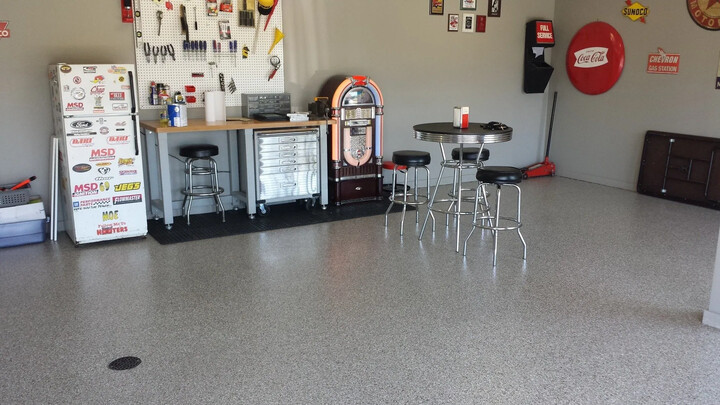 Get Your Garage Done Before the Holidays: Why Fall Is the Best Time to Coat
Lower humidity, fewer storms, and milder heat make fall the best time to coat a Florida garage floor. Here is
Get Your Garage Done Before the Holidays: Why Fall Is the Best Time to Coat
Lower humidity, fewer storms, and milder heat make fall the best time to coat a Florida garage floor. Here is
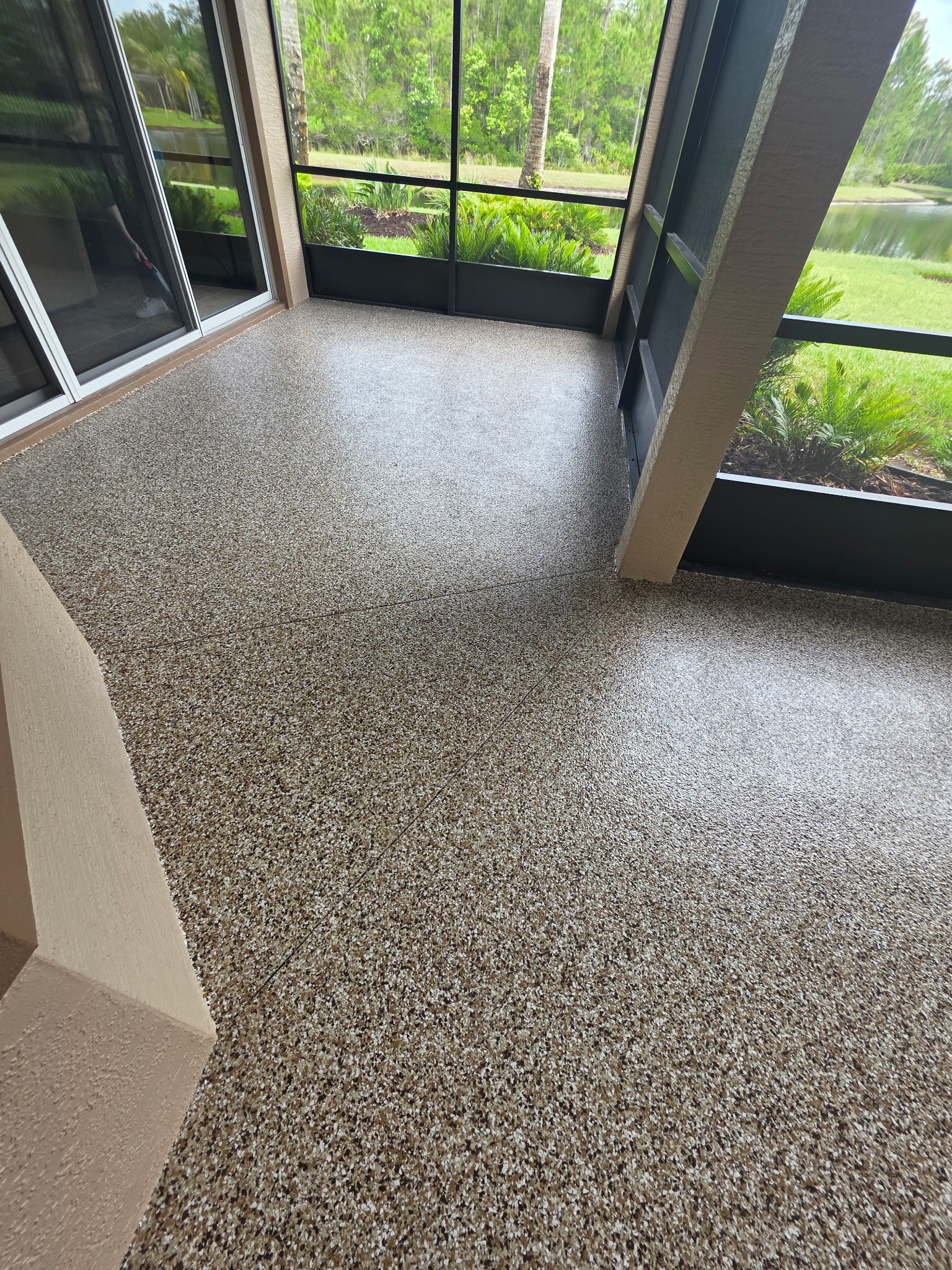 Beyond the Garage: Coating Patios, Basements, and Commercial Floors
The same polyaspartic system that fixes a garage works on patios, lanais, interior slabs, and commercial floor
Beyond the Garage: Coating Patios, Basements, and Commercial Floors
The same polyaspartic system that fixes a garage works on patios, lanais, interior slabs, and commercial floor
 Storm Ready Floors: How Concrete Coatings Handle Florida's Humidity and Flooding
Florida humidity and storm flooding are hard on a bare garage slab. Here is how a properly prepped coating han
Storm Ready Floors: How Concrete Coatings Handle Florida's Humidity and Flooding
Florida humidity and storm flooding are hard on a bare garage slab. Here is how a properly prepped coating han
Explore more
See the finishes we offer, read what your neighbors say, or find another community we serve near Why Garage Floor Coatings Peel in Florida (And the Prep That Prevents It).
Flake & metallic styles
Browse our flake and metallic finishes.
View styles →Reviews
Real results from homeowners and businesses across Central Florida.
Read reviews →Our work
Finished garage, home, and commercial floors from recent jobs.
View gallery →